October 23, 2026
Open Deck Transport Explained: Choosing Between Flatbed, Step Deck, and Conestoga for Your Freight
Open Deck Transport Explained: Choosing Between Flatbed, Step Deck, and Conestoga for Your Freight
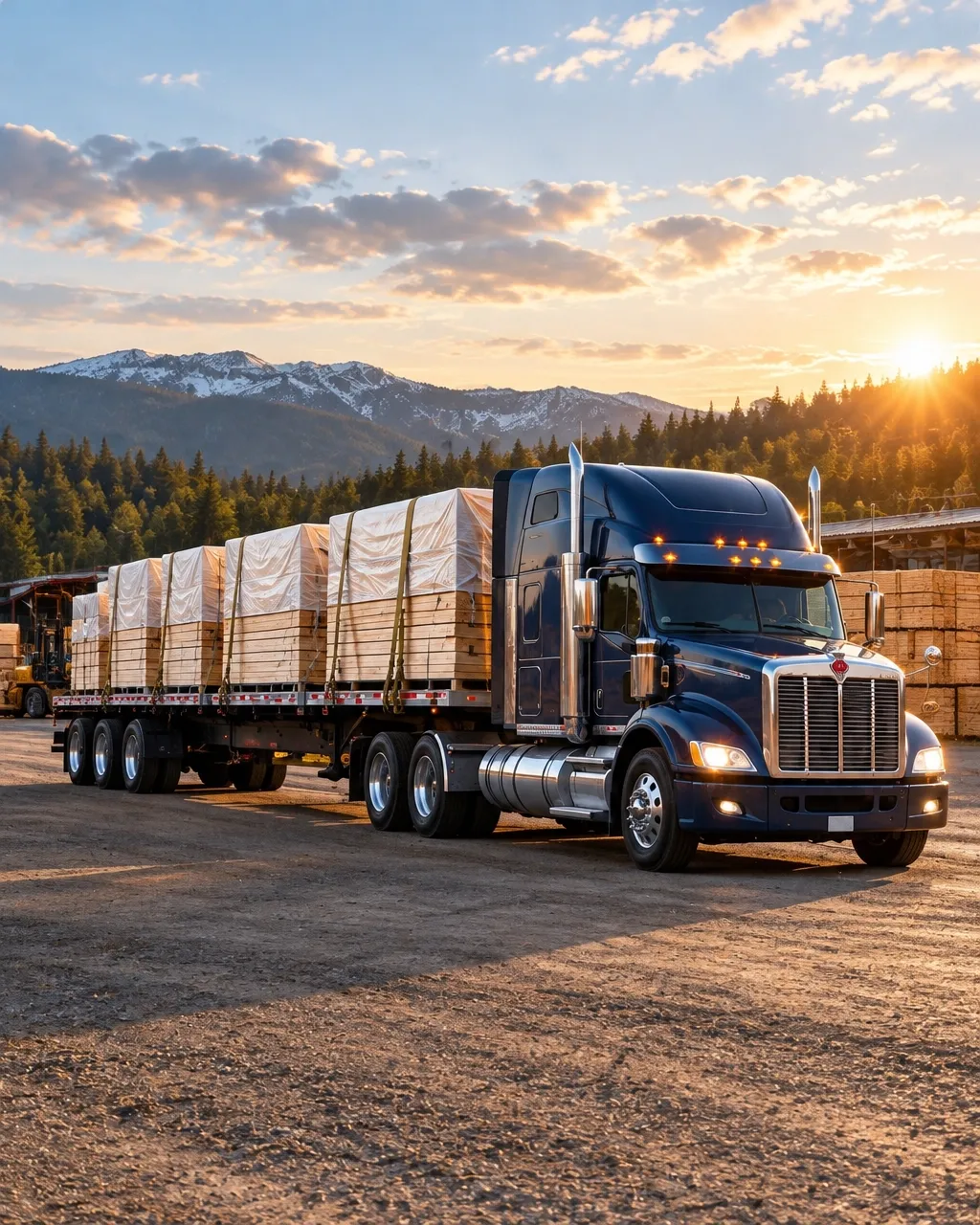
Open deck transport gives shippers flexibility for freight that is too large, awkward, or difficult to load into an enclosed trailer. But “open deck” covers several trailer types, and the right choice depends on more than the commodity name.
For lumber, engineered wood, trusses, and building materials, trailer selection affects loading access, cargo protection, legal height, securement, and the route. A few details shared before booking can help prevent a truck from arriving with the wrong deck.
This guide explains when to consider a flatbed, step deck, Conestoga, or RGN, and what information to provide when requesting capacity.
Start with the freight, not the trailer
Before choosing equipment, confirm the load’s:
- Total weight and exact dimensions
- Shape, center of gravity, and load distribution
- Loading and unloading method
- Required weather protection
- Pickup and delivery access
- Origin, destination, and requested dates
Measure the freight as it will travel, including packaging, pallets, blocking, and anything that adds height or width. If the load is irregular, share photos or a sketch. Accurate details help a broker match equipment to the freight and identify potential securement or routing concerns early.
If you need a broader overview of planning, securement, and flatbed shipping requirements, see The Ultimate Guide to Flatbed Freight Shipping.
Flatbed: a practical option for standard open-deck freight
A standard flatbed has one level deck, with no roof or sides. It is often a good fit for freight that can be loaded from the side, rear, or overhead and that fits within the available deck space and route limits.
Flatbeds commonly carry lumber, panels, steel, and other building materials. They can work well when the shipper needs flexible loading access and the freight does not need the lower deck height of a step deck or the tarp system of a Conestoga.
A typical flatbed deck is about five feet above the road. That matters when calculating total loaded height: the freight’s height is added to the deck height. A tall load on a standard flatbed may exceed the height allowed on some routes, even if the freight itself appears manageable.
Consider a flatbed when:
- The load fits comfortably on a single-level deck.
- Loading access is available from the side, rear, or overhead.
- The load’s height is suitable for the trailer and planned route.
- Tarping or another weather-protection plan can meet the shipment’s needs.
Step deck: lower deck height for taller freight
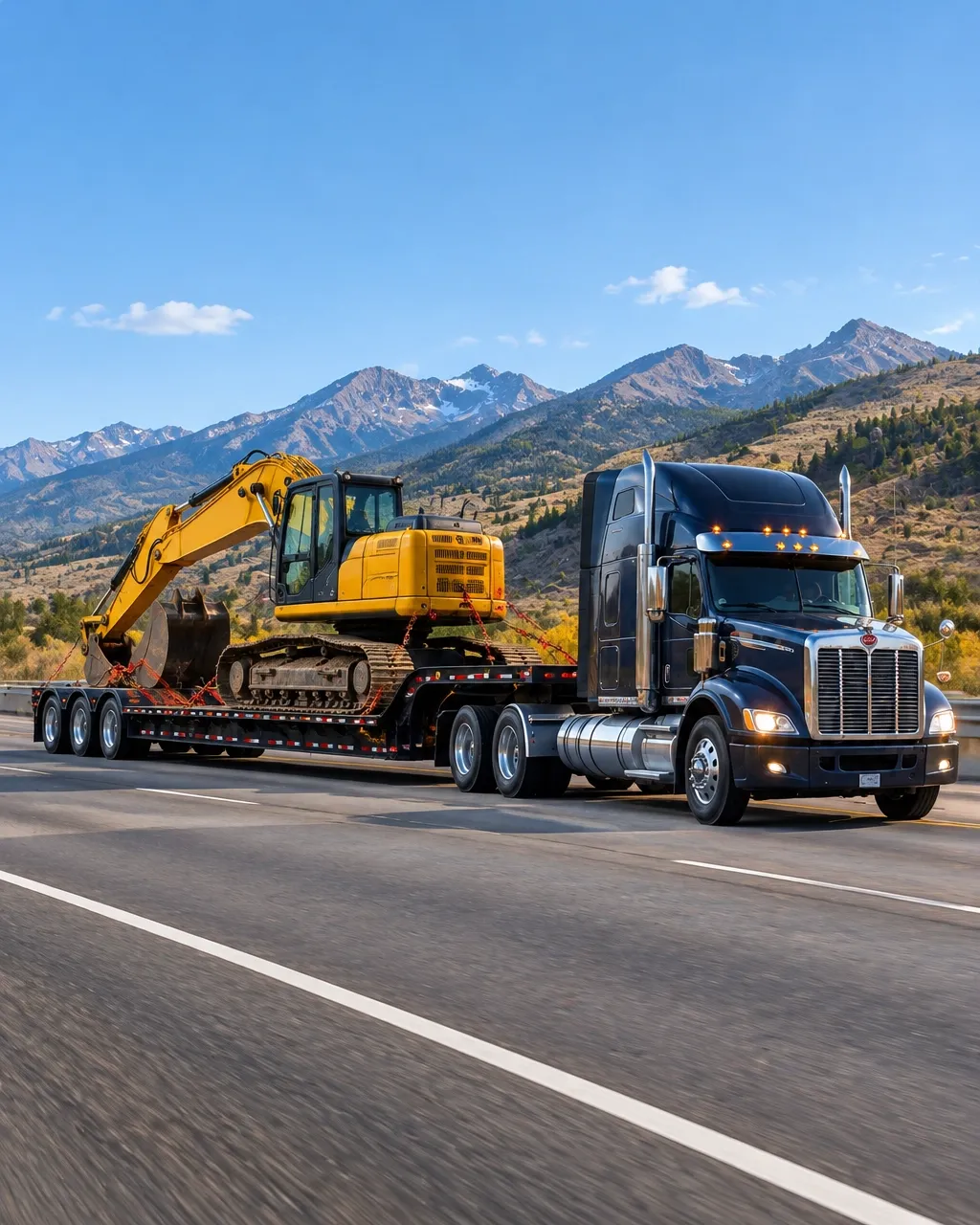
A step deck, also called a drop deck, has a short upper deck and a longer, lower main deck. Because the main deck sits closer to the road, taller freight may fit without exceeding a route’s overall height limit.
Step decks can be useful for taller building materials, machinery, or other freight that would be too high on a standard flatbed. However, the freight must still fit the usable length and width of the lower deck. The upper deck also affects how the load can be positioned and secured.
Lowering the deck does not automatically make a load legal. The carrier must check the full loaded height, including the trailer, freight, and securement materials, against the route’s requirements.
Consider a step deck when:
- The freight is too tall for a flatbed but fits on the lower deck.
- The load can be placed and secured without specialized loading access.
- The upper-deck length and transition work for the freight’s shape.
Conestoga: open-deck access with a rolling tarp
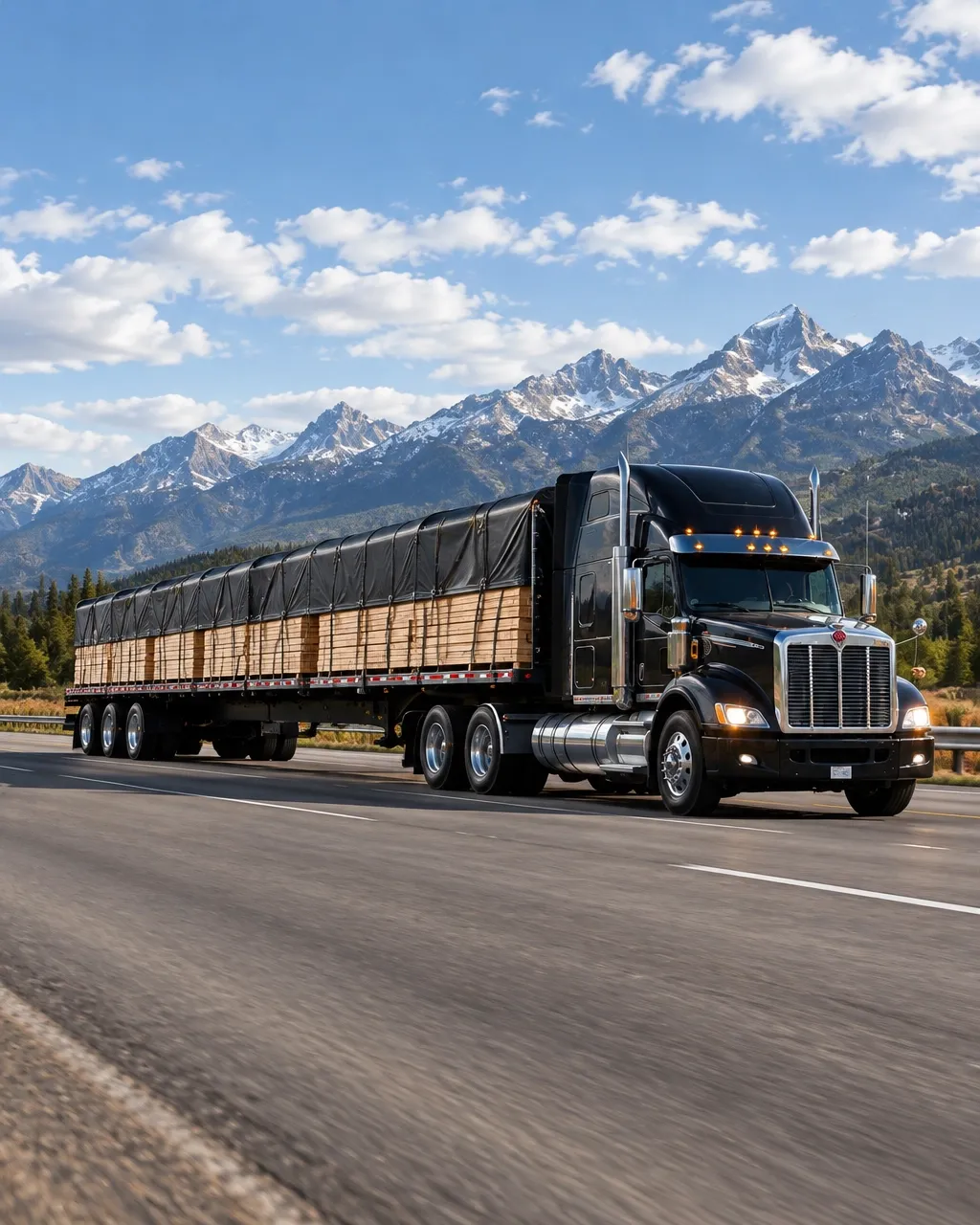
A Conestoga combines an open deck with a rolling tarp system. The tarp can cover the freight while allowing access for loading and unloading, which can be useful when cargo needs protection from weather or road debris.
Conestoga trailers are not all configured the same way. Some have flatbed decks; others use step-deck designs. Tarp systems also have specific interior clearances and operating limits. Confirm that the load will fit within the actual trailer’s usable length, width, and tarp height.
A rolling tarp offers protection, but it does not turn an open-deck trailer into an enclosed van. It may not provide the same level of weather protection or security as a hard-sided trailer. Discuss the cargo’s sensitivity and protection requirements with the carrier before booking.
Consider a Conestoga when:
- The freight needs protection from ordinary weather exposure.
- Loading access is still needed from the side or above.
- The freight fits the specific trailer’s tarp envelope.
- The handling plan accounts for operating the tarp safely.
RGN: for low-clearance or specialized heavy freight
A removable gooseneck (RGN) trailer disconnects at the front to create a ramp. This can allow wheeled or tracked equipment to be driven onto the trailer. RGN configurations also have a low well that can help move tall freight while reducing its height above the road.
RGNs are specialized equipment. Capacity, deck length, axle configuration, and loading method vary by trailer. Heavy freight may require additional axles, permits, route planning, and escorts. Confirm the equipment and requirements for the specific shipment rather than relying on a general RGN description.
Consider an RGN when:
- Self-propelled equipment needs to load using a ramp.
- Freight is too tall for a standard flatbed or step deck.
- The load’s weight or dimensions call for specialized equipment and planning.
RGN capacity and availability depend on the specific shipment and lane. Assured Logistics specializes in full truckload flatbed freight and arranges step deck and Conestoga equipment when needed. Contact us to discuss project-specific requirements.
Quick comparison
| Equipment | Useful when | Confirm before booking |
|---|---|---|
| Flatbed | Freight fits a single-level deck and needs open loading access | Loaded height, loading method, securement, and weather-protection plan |
| Step deck | Freight needs a lower deck to manage its total height | Lower-deck dimensions, load position, and route clearance |
| Conestoga | Freight needs a tarp while retaining open-deck access | Tarp clearance, deck configuration, and level of protection |
| RGN | Freight needs a ramp, low well, or specialized heavy-haul setup | Axle configuration, capacity, permits, route, and loading plan |
These are planning categories, not guaranteed equipment specifications. Trailer dimensions and payload vary. For reference, C.H. Robinson’s flatbed equipment guide lists typical dimensions for flatbeds, step decks, Conestogas, and RGNs, while noting that trailer specifications and state requirements can vary.
Check total height and route requirements
Measure from the ground to the highest point of the loaded freight, not just the freight itself. Include the deck height and any packaging or securement that adds to the profile.
The Federal Highway Administration’s size regulations overview explains that there is no federal vehicle-height requirement for commercial motor vehicles; states set their own limits. The FHWA report notes that many limits fall between 13 feet 6 inches and 14 feet, with exceptions on particular roads. Oversize loads may require permits or route-specific planning.
For a Western shipment, review the route across every state involved. A move from Oregon to another Western state may face different height limits, clearances, permit rules, or access constraints along the way. The carrier should verify the proposed equipment and route for the shipment.
Send a complete load profile
To help identify suitable open-deck transport, provide:
- Commodity and photos: Describe the freight and share images when its shape is unusual.
- Exact dimensions and weight: Include packaging, pallets, and blocking.
- Loading details: Identify available forklifts, cranes, ramps, docks, or other equipment.
- Securement and protection needs: Note tarp requirements and any sensitive surfaces.
- Locations and timing: Provide complete pickup and delivery details, including access restrictions and appointment requirements.
Clear shipment information supports better equipment selection, rate guidance, and planning before tender.
Request a flatbed freight quote
Assured Logistics is a flatbed freight broker based in Salem, Oregon, and arranges full truckload flatbed and open-deck freight across the 11 Western states and connected Lower 48 lanes. We work with lumber producers, engineered wood manufacturers, truss makers, and building material suppliers throughout Oregon and the West, and we start with the commodity, dimensions, lane, timing, loading needs, and securement requirements, then match the shipment to suitable capacity.
Request a flatbed freight quote with your shipment details. Whether you ship out of Salem, the Willamette Valley, or anywhere in the 11 Western states, you can also review our flatbed and open-deck services and Western coverage.